
[ez-toc]
Managing security operations effectively requires supervisors to know where their guards are at all times. This is where a security guard tracking app becomes essential. Traditional methods such as paper logs, phone calls, and sign-in sheets have long been used to monitor guards, but they do not provide complete visibility or real-time updates. While walkie-talkies help supervisors communicate with guards, they cannot accurately track their location or patrol activities. In this blog, we will compare traditional tracking methods with GPS-based tracking solutions and explain how they improve security operations.
Why Real-Time Security Guard Tracking Matters
Real-time security guard tracking allows supervisors to receive instant updates about guard locations, nearby personnel, and ongoing events. Live location tracking helps ensure that guards are performing their duties at their assigned locations and completing scheduled patrols on time. It also enables supervisors to verify patrol activities without relying on manual updates.
For example, during a VIP event, experienced guards should be assigned to sensitive areas. With real-time tracking, supervisors can confirm that the right personnel remain at the correct locations throughout the event. This improves accountability, enhances operational efficiency, and helps security teams respond more quickly when situations change.
Traditional Methods of Tracking Security Guards
Before GPS technology became widely available, security companies relied on traditional methods to monitor guard activities. While these methods were useful, they required significant manual effort and offered limited visibility into real-time operations.
Paper Sign-In and Sign-Out Sheets
Sign-in and sign-out sheets allow guards to record their arrival and departure times manually. Supervisors can use these records to verify attendance and estimate working hours. However, paper records can be misplaced or damaged, and inaccurate entries may occur if guards record incorrect arrival or departure times.
Radio Communication
Radio communication enables supervisors to stay in contact with security guards and receive immediate updates when needed. Although it provides quick communication, it does not allow supervisors to monitor guard locations or verify patrol completion automatically.
Phone Calls and Check-In Calls
Supervisors and team leaders often use phone calls to check on individual guards or communicate with the entire team. However, this process can be time-consuming because supervisors must wait for guards to answer their calls. During emergencies, these delays may affect response times and overall coordination.
Manual Patrol Logs
With manual patrol logs, guards record the areas they have patrolled and any observations made during their shifts. Supervisors review these records after the patrol is completed. Since the process depends on manual entries, guards may unintentionally miss important observations, resulting in incomplete records.
How GPS Security Guard Tracking Apps Work
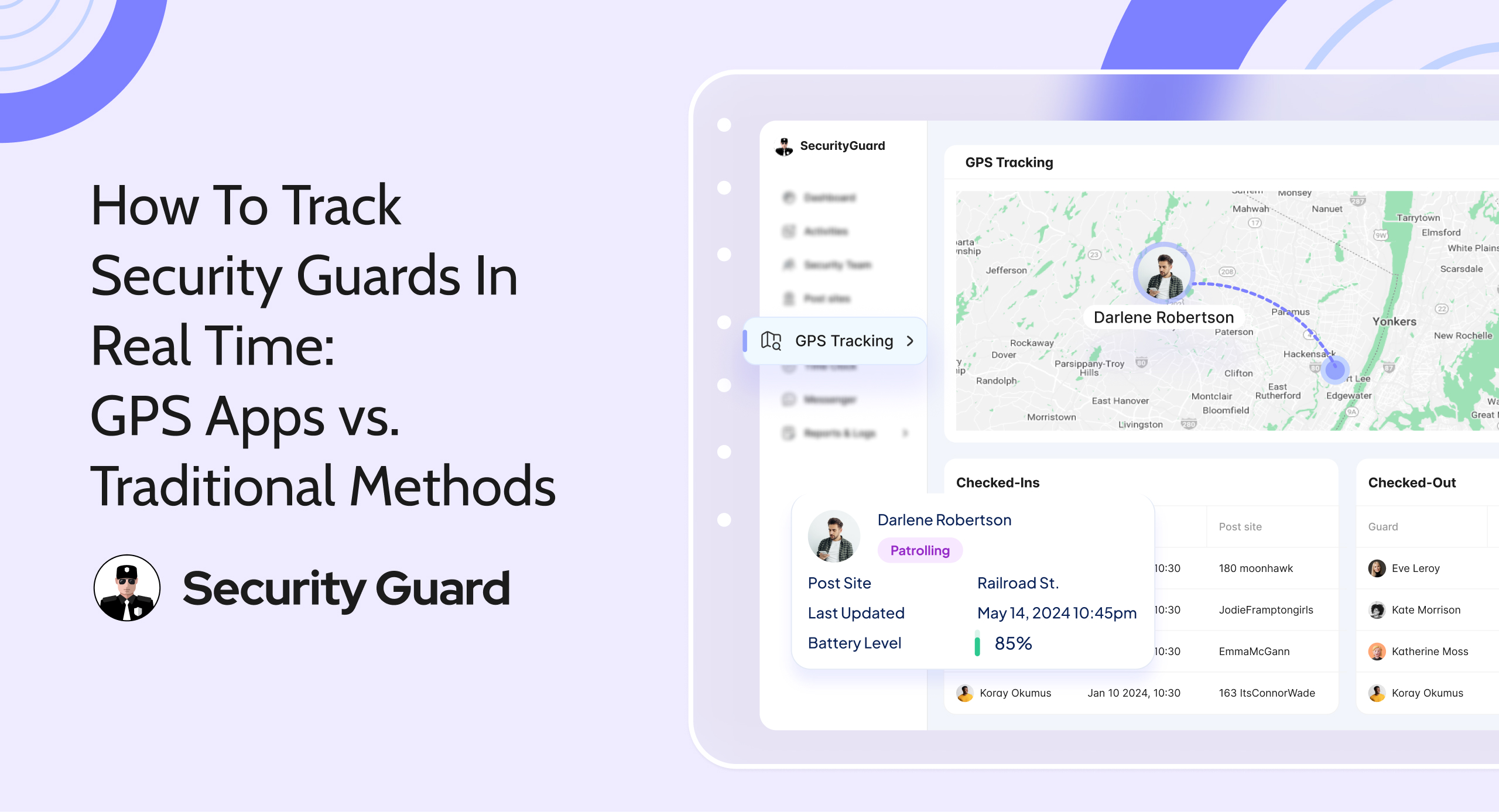
security guard tracking software uses GPS technology to monitor the real-time location of security guards. Supervisors can view guard locations through a centralized dashboard, giving them complete visibility across all assigned sites.
Most tracking applications include features that allow supervisors to locate guards instantly, contact them directly, and notify nearby team members when assistance is required. Access to specific locations can also be controlled, ensuring that only authorized or experienced guards enter sensitive areas. Modern tracking solutions combine GPS technology with checkpoints, geofencing, patrol routes, and digital reporting to provide a complete monitoring solution.
GPS Apps vs. Traditional Tracking Methods
Before choosing a tracking solution, it is important to compare the advantages of guard tracking software with traditional monitoring methods.
GPS-based tracking provides real-time location visibility, while traditional methods offer limited tracking capabilities. Patrol verification is automated through GPS tracking, whereas manual methods require supervisors to verify records after patrols are completed. Location history is stored digitally and can be reviewed at any time, while traditional methods make historical tracking difficult.
Digital reporting also simplifies documentation by storing reports securely in the cloud, replacing paper-based records. Incident reporting becomes faster because supervisors receive alerts along with location information. GPS-based systems also improve accountability through digital tracking records and make multi-site management easier. Although GPS accuracy depends on the device and network availability, it provides significantly greater operational visibility than manual tracking methods.
Key Benefits of Using a Security Guard Tracking App
Choosing a security guard tracking app offers several benefits for security companies. It helps automate routine processes, improves operational efficiency, reduces manual work, and supports better decision-making.
Real-Time Location Visibility
Supervisors no longer need to call guards repeatedly for status updates. Instead, they can monitor guard locations in real time through the application. This provides better visibility across multiple sites while allowing guards to stay focused on their duties.
Better Patrol Verification
GPS tracking helps supervisors verify that guards have completed patrols in their assigned areas. Features such as geofencing and digital checkpoints strengthen patrol verification and help ensure that all required locations are covered.
Faster Emergency Response
During an emergency, guards can immediately notify supervisors or team leaders through the application. Supervisors can quickly identify the guard’s location, alert nearby personnel, and coordinate a faster response. This improves communication and helps security teams react more effectively during critical situations.
Automated Records and Reports
Digital tracking eliminates the need for handwritten records by storing patrol and location data securely in the cloud. These reports simplify record management, support future planning, and make it easier to review incidents whenever necessary.
Improved Accountability
Digital records provide reliable proof of patrol completion, attendance, and guard activities. Supervisors can share this information with clients to demonstrate transparency, improve trust, and show that security services are being delivered professionally.
Limitations of Traditional Security Guard Tracking
Traditional tracking methods played an important role in the early days of the security industry and helped security companies manage their operations effectively. However, these methods also have several limitations. In a traditional guard tracking system, paper records can be lost, damaged, or filled out incorrectly. Although radio communication is useful for staying in touch with security guards, it cannot provide their exact location or verify patrol completion.
Managing multiple guards across different sites is also challenging because supervisors must rely on manual updates. Calculating working hours, reviewing patrol records, and preparing reports require additional time and effort. Since reports are often submitted after the shift, supervisors may not receive important information when it is needed most.
When Traditional Tracking Methods May Still Work
GPS tracking is not required for every security operation. For example, temporary events such as weddings, festivals, or small gatherings may only require basic crowd management. In these situations, a traditional security guard monitoring system can still be effective.
Small security companies with a limited number of guards and a single client site may also manage their operations successfully using traditional methods. When the team is well-trained and supervision is straightforward, manual processes may be sufficient for day-to-day operations.
What to Look for in a security guard tracking app
Choosing the right security guard tracking app is easier when you understand the features that support your security operations. Before selecting a solution, consider the following capabilities.
Real-Time GPS Tracking
Supervisors should be able to monitor guard locations throughout their shifts. If a guard leaves the assigned area before the shift ends, the application should immediately notify the supervisor.
Guard Patrol Tracking
The application should help guards follow assigned patrol routes and complete required checkpoints. This ensures patrols are completed accurately and consistently.
Geofencing
Geofencing allows supervisors to create location-based boundaries and receive alerts whenever a guard enters or leaves a designated area. This feature improves site monitoring and accountability.
SOS/Panic Alerts
During an emergency, guards should be able to send an instant alert through the application. Supervisors can quickly notify nearby team members and coordinate a faster response.
Digital Check-Ins
Digital check-ins simplify attendance tracking and shift verification. They also provide accurate records of guard activities throughout the workday.
Incident Reporting
The application should allow guards to submit incident reports with photos, videos, notes, and other supporting information. Digital records are securely stored and can only be accessed or managed by authorized personnel.
Location History
Location history helps supervisors review previous patrol routes and guard movements. These records can also help incoming guards continue their patrols without missing important checkpoints.
Offline Capability
A reliable application should continue working even when an internet connection is unavailable. Information can be stored securely on the device and automatically synchronized once the network connection is restored.
Supervisor Dashboard
A centralized dashboard allows managers to monitor guards, client sites, patrol status, and ongoing activities from a single interface.
Reports and Analytics
Reports and analytics convert tracking data into valuable operational insights. These reports help supervisors evaluate employee performance, monitor productivity, and identify opportunities for improvement.
How to Choose Between Traditional Tracking and GPS Tracking
A security guard tracking system should match your business requirements. Before making a decision, consider the number of guards you manage, the number of client sites, and the level of visibility you need.
Traditional methods may work for managing one or two locations, but as operations expand, manual processes become more difficult to maintain. GPS-based solutions simplify multi-site management, improve communication with clients, and provide real-time visibility into guard activities.
You should also compare the risks associated with manual tracking and GPS-based monitoring. If your goal is to improve service quality, increase operational efficiency, and grow your business, investing in a modern tracking solution is a practical choice. The Security Guard App provides the tools needed to support these goals while helping security companies manage their operations more efficiently.
The Future of Security Guard Monitoring
The security industry is steadily moving from manual processes to digital operations. Companies still using traditional methods can improve their workflows by adopting modern technology.
GPS tracking has become an important part of today’s security operations. Along with location monitoring, digital solutions support incident reporting, patrol management, alerts, scheduling, and team communication. Having all this information in one place helps supervisors and decision-makers respond faster and make better operational decisions.

Conclusion
Understanding how to track security guards in real time helps security companies choose the right monitoring approach for their operations. Traditional methods can still support small teams and simple security requirements, but they offer limited visibility and require significant manual effort.
A modern security guard app provides real-time location tracking, digital patrol verification, automated reporting, and improved accountability. As security operations grow, adopting GPS-based technology can help companies improve efficiency, deliver better service, and build greater client confidence. Choosing the right solution today can support the long-term growth and success of your security business.
Leave A Comment