
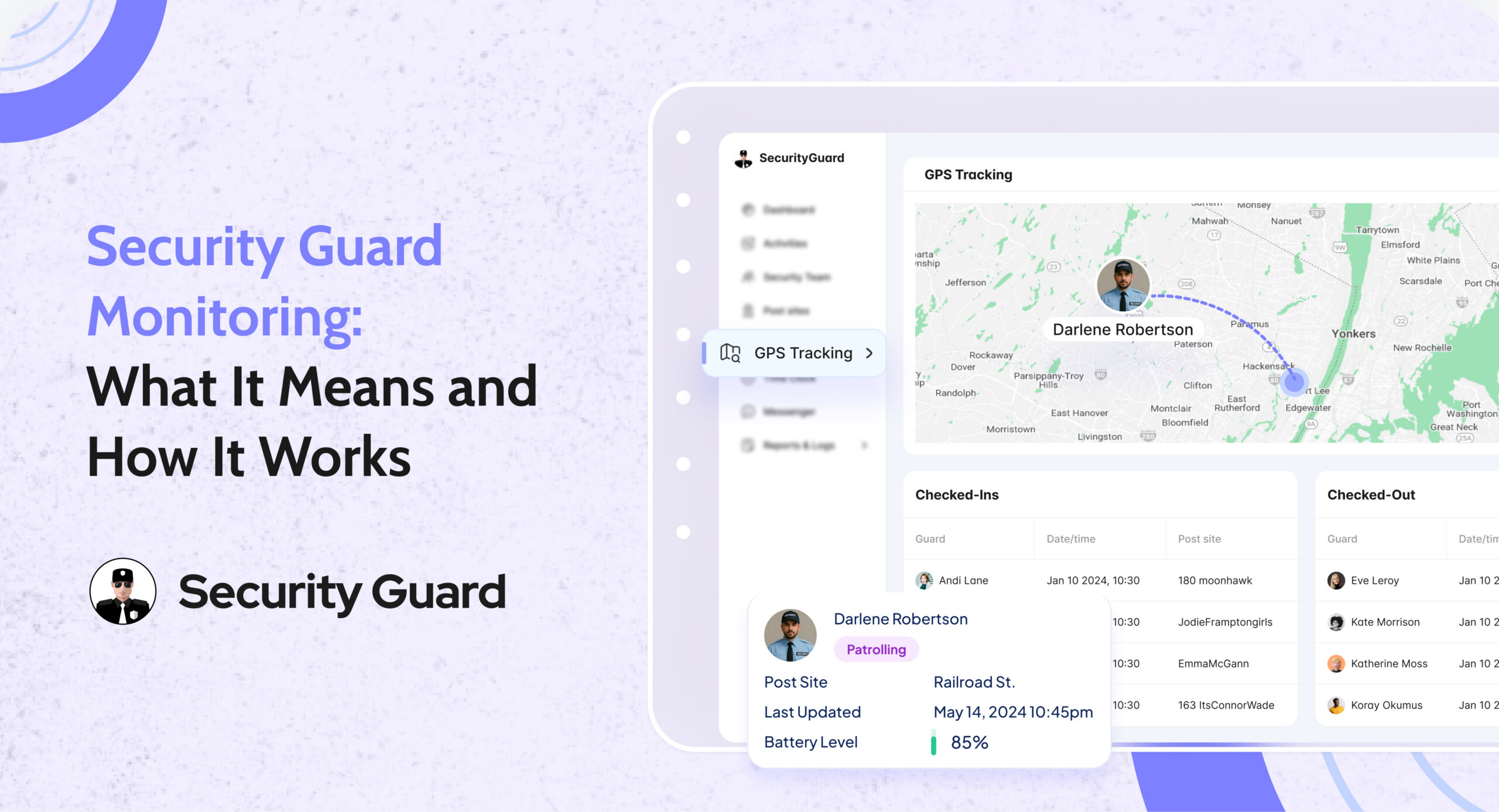
Security guard monitoring has become essential for modern security operations because it provides complete updates about security guard activities. By using monitoring software, security companies can reduce communication gaps between supervisors and guards while eliminating the challenges of paper logs and missing data.
In a traditional supervision method, supervisors assign tasks to security guards and receive updates mainly through direct communication. However, modern security operations require better visibility, accountability, and faster response times. In this blog, we will discuss what security guard monitoring is and how it works in modern security operations.
What Is Security Guard Monitoring
Security guard monitoring involves tracking the activities and involvement of guards throughout the guarding process. Guards need to remain attentive to their assigned responsibilities and provide regular updates about their work to help prevent potential security issues.
Security guard tracking allows supervisors to monitor important work records, including check-ins, check-outs, and completed activities. Supervisors can review reports to determine whether security operations are being carried out smoothly. For patrol-based operations, continuous oversight is especially important to ensure that guards follow their assigned responsibilities.
Why Do Security Companies Need Guard Monitoring Systems?
Managing security operations across multiple sites can be challenging when using traditional methods. Manually verifying whether guards have completed their assigned protocols can be time-consuming and difficult to maintain accurately.
Real-time visibility is essential for modern security operations, but traditional methods often make it difficult to achieve. Clients expect reliable and professional security services, so using outdated monitoring methods may no longer meet their expectations.
An advanced monitoring system can help security companies reduce missed patrols, improve accountability, and respond to incidents more quickly.
How Security Guard Tracking Works
The security guard tracking process can be performed through GPS-based location tracking. This technology helps supervisors identify the current location of guards and monitor their activities. Guards can check in using their smartphones when they begin their shifts and check out when their shifts end, helping companies maintain accurate working-hour records.
Site verification is also important because it helps ensure that guards have properly covered their assigned locations. GPS technology can support route monitoring and patrol verification by showing whether guards have visited all designated locations.
Guards can also share live location updates with supervisors when required. Properly configured location tracking can provide useful operational visibility while respecting privacy and authorized access requirements.
Understanding Real Time Guard Visibility
Real time guard visibility provides supervisors with information about where guards are located and what activities they are completing. Supervisors can use a centralized dashboard to monitor guard activities and manage operations across multiple sites.
Site coverage can be verified by reviewing guard locations and activity records. Supervisors can also identify missed checkpoints and delayed patrols remotely. In an emergency, they can respond quickly and communicate with the appropriate guards.
For companies managing multiple sites, centralized visibility helps supervisors maintain consistency and better control over daily security operations.
Checkpoint Verification: Proving Patrols Were Complete
Supervisors can verify that authorized guards have visited designated checkpoints using QR codes. RFID-based verification can also simplify the process, although companies should implement appropriate security measures to prevent unauthorized use of identification methods.
Time-stamped patrol records provide clear information about when guards visited specific locations. Location-verified checkpoint completion also supports real time guard visibility by providing supervisors with reliable patrol information.
Supervisors can use these records to review patrol documentation, identify missed checkpoints, and maintain accurate records of ongoing security operations.
How Guards Accountability Software Improves Performance
Digital monitoring makes it easier to track guard attendance and organize shifts according to site requirements. Supervisors can monitor whether patrols are completed on time and review activity records when necessary.
Incident reporting is another important benefit because guards can submit information using images, videos, and text. Supervisors can review these reports and coordinate an immediate response when an incident occurs.
Digital monitoring can also help reduce attendance fraud, improve patrol completion, and provide supervisors with better information for evaluating guard performance.
Key Features of a Modern Security Guard Monitoring System
Live GPS tracking is an important feature of a modern guard monitoring system because it helps supervisors verify that guards are at their assigned locations. Digital check-ins and check-outs can also be completed remotely, eliminating the need for guards to visit the office or make calls to confirm their shift status.
A modern SG monitoring system should also support patrol route monitoring. If a guard misses an assigned route, supervisors can provide immediate instructions to help correct the issue.
Security guards should be able to submit incident reports directly from their smartphones, including relevant images, videos, and text. A secure messaging system can help protect communication by restricting access to authorized users.
Post order integrations can help supervisors organize guarding activities according to established rules and requirements. Automated alerts can also notify the appropriate team members when specific events occur, such as unauthorized entry.
Cloud based reporting keeps operational information centrally accessible while helping protect records from unauthorized changes.
Benefits of Digital Guard Monitoring for Security Companies
Implementing digital monitoring can improve operational efficiency and consistency across security operations. Companies can maintain records for individual guards, including attendance, working hours, patrols, and other activities.
When an incident occurs, guards can immediately inform supervisors so that appropriate action can be taken. Another major benefit is reduced paperwork, which can help minimize the risk of lost or incomplete records.
Companies can also use accurate working-hour information to support payroll processing. Payroll records can include total working hours and other relevant information required for compensation.
Digital records can also improve client reporting by allowing security companies to provide clear documentation about completed activities and incident responses. Easier compliance tracking and centralized data management can save time and support better operational decisions.
By implementing digital monitoring, security companies can provide more consistent and reliable services to their customers.
Common Mistake Security Company Should Avoid
Security companies should avoid relying heavily on manual logs because they can be time-consuming and difficult to manage accurately. Failing to verify patrol completion can also increase operational risks and make it difficult to identify missed assignments.
Ignoring real-time alerts can delay the response to security incidents, so supervisors should monitor important notifications and respond promptly.
Assigning untrained guards is another major risk for security operations. Proper training helps guards understand their responsibilities and respond appropriately to different situations.
Companies should also review operational data regularly. Without regular analysis, it can be difficult to identify areas that need improvement. Outdated tracking methods can consume additional time and manpower while providing limited visibility.
How To Choose the Right Security Guard Monitoring Solution
The software should be accessible through smartphones so guards can complete their tasks directly from the field. GPS accuracy is also important because supervisors need reliable location information rather than estimated or inaccurate positions.
A security guard system should include checkpoint verification to help confirm that guards have visited assigned locations. A real-time dashboard is also essential because supervisors need to monitor guard activities and operational updates from a centralized location.
Strong reporting capabilities can help companies maintain consistent operations and manage critical situations more effectively. Integration with work scheduling and incident reporting should also be considered when selecting a solution.
Offline functionality is another important feature. If guards lose network connectivity, they should still be able to submit their work reports. Once the connection is restored, the reports can be synchronized with the supervisor’s system.
Reliable data backup is also important because it allows companies to recover records if local data is damaged or lost. Finally, the software should be scalable so it can support the company as the security business grows.
Conclusion
You now have a better understanding of how security guard monitoring works in modern security operations and how it can help businesses improve visibility, accountability, and operational control.
Some companies may assume that implementing a security guard system will result in high costs, but choosing the right solution can provide valuable features without unnecessary expenses. If you are looking for reliable security software within your budget, Security Guard App can be a suitable choice for your business.
Start your free trial today and explore its features to provide more efficient and professional security services. It is time to strengthen your security operations with a modern monitoring solution.
Leave A Comment