
Security officers are routinely assigned to walk hazardous beats alone: unlit industrial yards, vacant commercial properties, and remote construction sites in the middle of the night. When an aggressive trespasser attacks or a sudden medical crisis strikes, a lone guard has only seconds to call for help.
In high-stress situations, traditional two-way radios and standard phone calls often fail. A guard cannot always speak aloud to explain where they are, and radio channels can be noisy, jammed, or out of range. If dispatch cannot pinpoint an officer’s exact location, life-saving backup is delayed.
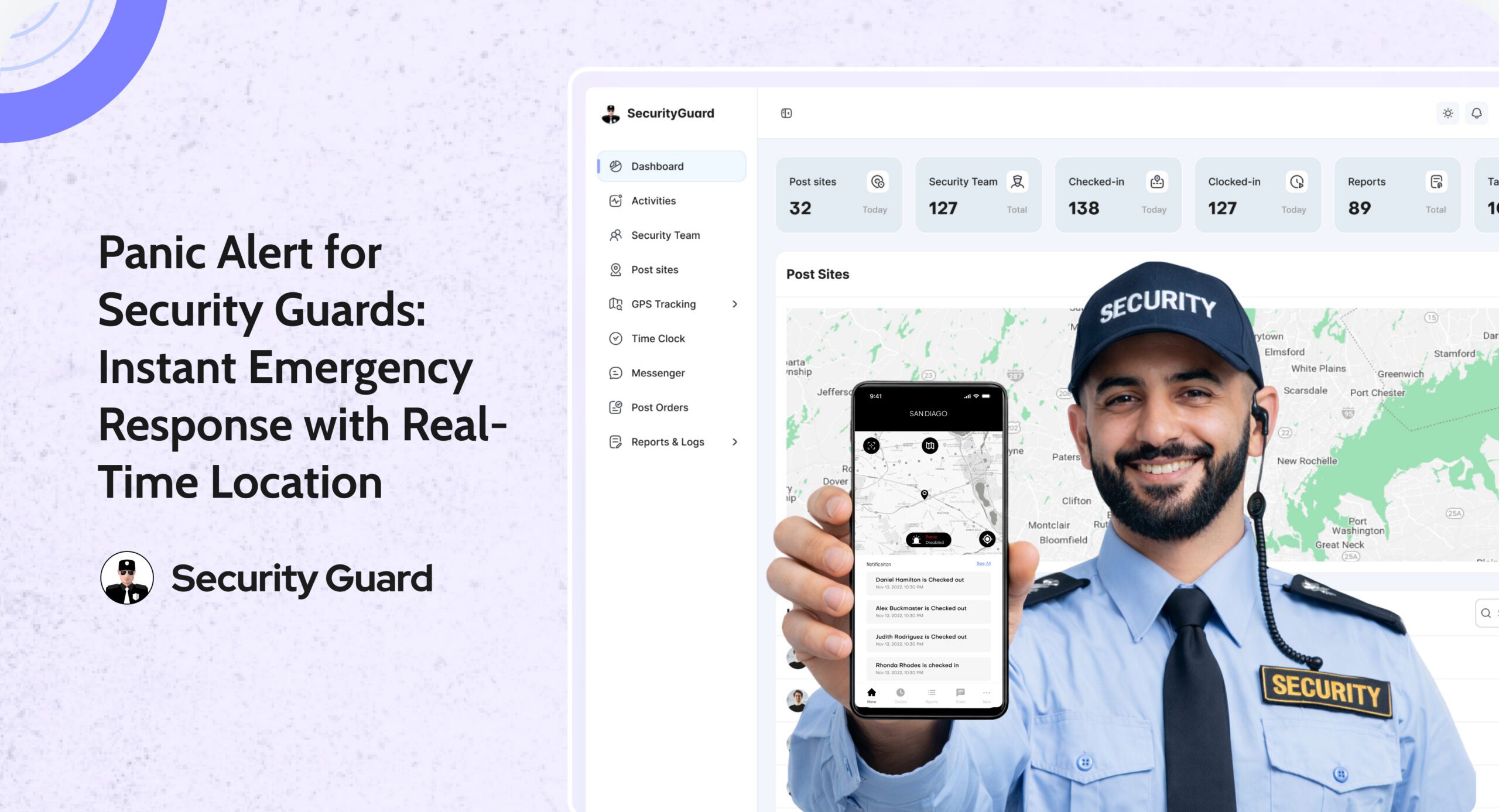
Integrating a dedicated panic alert with real-time GPS into your guard tour system changes everything. With a single tap on their smartphone, an officer can send a silent or audible distress signal that routes live satellite coordinates straight to dispatch, cutting emergency response times to the absolute minimum.
Quick Comparison: Two-Way Radios vs. Real-Time GPS Panic Alerts
Here is how legacy communication methods compare to modern mobile panic alert systems when an officer faces an emergency:
| Emergency Factor | Traditional Two-Way Radios | Mobile App with GPS Panic Alert |
|---|---|---|
| Activation Speed | Requires pressing push-to-talk and speaking aloud. | Instant one-tap SOS trigger from the guard’s mobile screen. |
| Location Accuracy | None. The officer must verbally describe their surroundings. | Exact GPS latitude, longitude, and map pin sent instantly. |
| Silent Operation | Impossible. Voice transmission alerts intruders nearby. | Supports silent alarms that notify dispatch without tipping off attackers. |
| Dispatch Visibility | Audio only. Prone to static and missed radio calls. | Visual pop-up alert, audible siren, and live map tracking on screen. |
| Post-Incident Audit | Manual logbook entries often open to dispute. | Automated digital audit trail with exact timestamps for insurance and police. |
Why Lone Worker Protection Is a Serious Operational Priority
Working solitary shifts exposes security guards to unique hazards that team patrols rarely face. In many jurisdictions, commercial property owners and security contractors are legally bound by strict duty of care regulations to protect lone workers.
Common critical scenarios include:
- Physical Violence and Confrontation: Intercepting trespassers, organized shoplifters, or vandal groups who turn aggressive when challenged.
- Medical Emergencies: Sudden cardiac events, diabetic shocks, or heat exhaustion during perimeter patrols.
- Slips, Trips, and Falls: Navigating unlit stairwells, slick loading docks, or construction debris in bad weather where a fall can cause loss of consciousness.
- Environmental Hazards: Gas leaks, sudden electrical fires, or chemical spills in vacant warehouses.
When an officer is alone, they cannot afford a multi-step emergency process. They need a safeguard that functions even when they cannot speak or make a regular phone call.
How a Real-Time GPS Panic Alert System Works
Modern guard management platforms turn the officer’s everyday patrol smartphone into a high-precision personal safety beacon. The workflow runs seamlessly through four automated steps:
1. One-Touch or Silent Activation
During routine duties, the officer keeps their guard app open for clock-ins, tour checkpoints, and digital logs. If danger strikes, they simply tap or hold the dedicated SOS button on the home screen. A silent alert can trigger without flashing lights or alert tones, protecting the guard from escalating a confrontation with a hostile suspect.
2. Instant GPS Coordinate Transmission
The moment the panic button is triggered, the software captures the device’s exact GPS location. It immediately pushes these coordinates along with the guard’s name, assigned site, and battery level directly to the central dispatch console.
3. Real-Time Visual and Audible Dispatch Alarms
At dispatch, the system flashes a high-priority visual pop-up and sounds an alert tone. The control room sees a live map displaying the guard’s exact location, eliminating any confusion about which building, floor, or corner of the property requires urgent backup.
4. Coordinated Emergency Escalation
Armed with real-time location data, supervisors can immediately send nearest on-duty mobile patrol units and contact emergency services (police, fire, or ambulance). First responders receive exact GPS directions rather than vague property addresses, cutting minutes off response times.
The Operational Advantages of GPS-Enabled Panic Systems
Pinpoint Accuracy Across Sprawling Sites
Large commercial plazas, industrial parks, and gated residential communities span dozens of acres. If an officer calls dispatch saying, “I am near the back warehouse,” finding them in the dark can take twenty minutes. Live GPS tracking places a pin directly on the officer, guiding backup directly to their location.
Eliminating False Claims and Guard Anxiety
Guards who know their safety is monitored work with greater confidence and stay sharper on shift. At the same time, recorded panic logs, complete with timestamps and GPS data, protect your security firm against claims of negligence or delayed response during police investigations.
No Costly Proprietary Hardware Needed
In the past, outfitting guards with personal duress alarms required purchasing expensive, bulky standalone hardware with individual SIM cards and recurring subscription fees. Cloud-based security apps integrate panic features directly into the Android or iOS smartphones guards already carry for tours and daily reporting.
Best Practices for Rolling Out Panic Alerts to Your Team
Implementing an emergency system requires more than just installing an app. Build a clear operational safety protocol around it:
- Conduct Regular Panic Drills: Train officers on how and when to trigger emergency alerts. Test both silent and standard SOS alarms monthly so guards know how the feature responds under stress.
- Define Response Protocols: Make sure dispatchers know the exact chain of command when an SOS sounds: who to call first, how to verify the alert, and when to dispatch local law enforcement immediately.
- Maintain Reliable Device Batteries: A dead phone cannot send an SOS alert. Require guards to check battery levels at shift start and carry portable power banks on long night patrols.
- Pair with Tour Checkpoints: Combine panic buttons with active checkpoint scans (QR or NFC) to ensure guards move through dangerous areas on schedule. If an officer misses multiple checkpoints without triggering an alert, dispatch can check in proactively.
Protect Your Guards and Streamline Patrols with Security Guard App
Keeping your security officers safe in the field is your highest operational responsibility. Security Guard App combines essential lone worker protection with everyday guard management into a single, intuitive mobile platform.
Give your officers and dispatchers complete confidence on every shift:
- One-Tap In-App SOS Panic Button: Instant emergency triggers that alert dispatchers in seconds with zero delay.
- Real-Time GPS Guard Tracking: Monitor guard locations continuously across entire properties with live map visibility.
- Guard Tour Management: Scan QR codes and NFC tags along patrol routes to maintain proof of presence.
- Instant Incident Reporting: Document security threats, safety hazards, and maintenance issues with photos and notes right from the field.
Do not leave your lone workers vulnerable. Discover Security Guard App today to equip your guards with real-time GPS safety alerts and take your patrol management to the next level.
Frequently Asked Questions About Security Guard Panic Alerts
Does the panic button work if the guard’s phone has a poor internet connection?
Most modern security apps store location data locally and prioritize low-bandwidth emergency packets. Even on weak cellular signals, short distress packets containing GPS coordinates transmit far more reliably than voice calls or streaming video.
How does real-time GPS differ from standard mobile location sharing?
Standard phone location sharing updates intermittently to conserve battery, which can lag behind by several minutes. An in-app security panic alert forces an instant, high-frequency GPS ping, providing dispatch with live, continuous tracking until the emergency is marked resolved.
Can panic alerts be used for silent duress situations?
Yes. Many modern platforms allow guards to trigger a silent alarm that does not make a sound or show an alert screen on the device. This allows an officer facing an aggressive or armed individual to call for help without escalating the danger.
Leave A Comment