
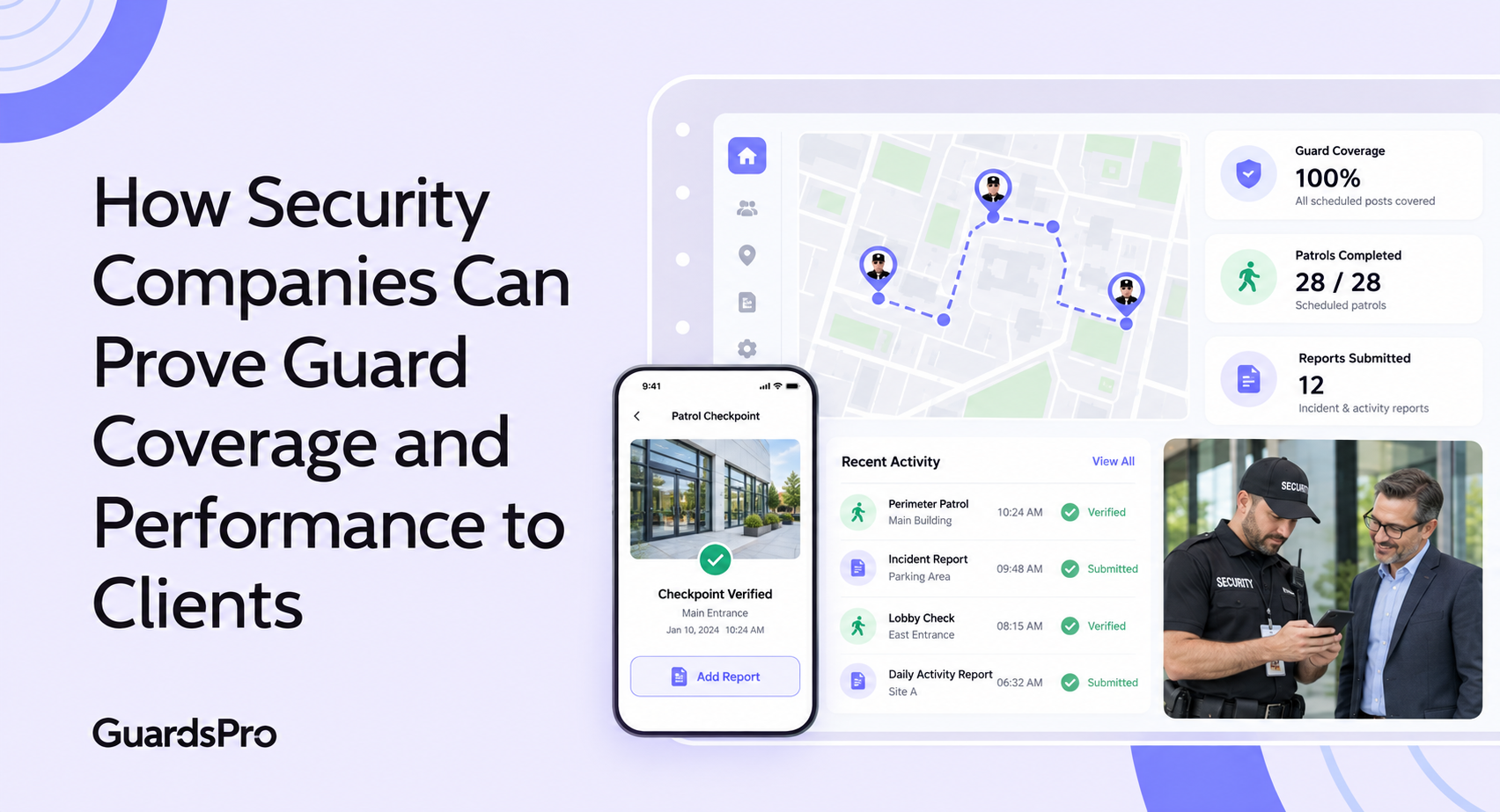
Providing security services involves more than assigning guards to a location. Security companies also need to demonstrate that guards were present, completed assigned duties, followed site procedures, and responded appropriately to incidents.
Clients often want clear evidence that contracted services were delivered. Digital tools can support this through Security guard performance tracking, GPS data, digital check-ins, time-clock records, activity reports, post orders, and incident documentation.
Instead of relying entirely on paper logs or verbal updates, companies can create a centralized record of daily security operations.
Use Digital Check-In and Check-Out Records
Digital attendance records provide a simple way to establish Proof of guard presence. Guards can check in and out through a mobile application, creating records that include the guard, site, and date/time.
These records can help companies:
-
Verify guard arrival and departure.
-
Maintain consistent attendance records.
-
Identify late arrivals or early departures.
-
Review historical attendance.
-
Support client service reviews.
Combining attendance records with other operational data provides stronger evidence of coverage.
Track Guard Locations With GPS
Attendance alone may not show where a guard was during a shift. Security guard tracking can provide additional visibility through live locations and historical tracking information.
GPS data can help managers:
-
Confirm guard location.
-
Review movement during assignments.
-
Investigate coverage questions.
-
Identify potential gaps.
-
Provide supporting information during client reviews.
GPS should be considered alongside attendance, reports, and assigned duties rather than as the only measure of performance.
Document Guard Activities and Incidents
Being present is only one part of security service delivery. Guards may also need to conduct patrols, follow post orders, complete checks, and report incidents.
Digital security guard activity reports can document:
-
Completed patrols and checks.
-
Incident details.
-
Date and time.
-
Guard information.
-
Notes and observations.
-
Supporting photos or media.
-
Actions taken.
This creates a clearer record of what occurred during a shift.
Maintain Clear Post Orders
Performance can be evaluated more consistently when guards have clear instructions. Digital post orders can provide site-specific responsibilities, procedures, descriptions, and supporting files.
Managers can connect these instructions with activity reports to determine whether required duties were completed and investigate exceptions when necessary.
Create Useful Client Performance Reports
Clients do not necessarily need every piece of operational data. They need information that clearly shows whether the agreed service was delivered.
A useful report can include:
-
Guard attendance.
-
Site coverage.
-
Patrol activity.
-
Incident information.
-
Exceptions or missed activities.
-
Relevant timestamps.
-
Supporting GPS or photographic evidence.
Consistent security client reporting can make service reviews easier and reduce the need for manually prepared summaries.
Use Real-Time Monitoring
Reports provide historical information, but supervisors may also need visibility while guards are working. Security guard monitoring can help managers review check-ins, current locations, submitted reports, and other operational activity.
When unusual activity occurs, supervisors can investigate sooner rather than discovering the issue after the shift has ended.

Conclusion
Security companies can demonstrate guard coverage and performance by connecting attendance, GPS tracking, time records, activity reports, post orders, and incident documentation.
A centralized system can turn everyday guard activity into useful service evidence. This helps managers review operations while giving clients clearer information about coverage and performance.
Security Guard App provides tools for GPS tracking, digital check-ins, time-clock management, reports, post orders, messaging, passdown logs, and automated reporting, helping security companies organize operational information in one platform.
FAQ
How can security companies prove a guard was on-site?
Digital check-in and check-out records combined with GPS tracking can provide evidence of guard presence and assignment times.
What should a security guard performance report include?
It can include attendance, site coverage, patrols, incidents, exceptions, timestamps, and relevant supporting evidence.
How does GPS tracking improve accountability?
GPS provides visibility into guard locations during assignments and can help managers investigate coverage questions.
Why is proof of guard presence important?
It gives clients documented evidence that contracted security services were delivered as expected.
What is the difference between guard presence and performance?
Presence shows where and when a guard was working, while performance also considers completed duties, patrols, reports, and responses to incidents.
Leave A Comment